TUE 21 - SAT 25 APRIL
INFO
REVIEWS
CAST & CREATIVES
PHOTOS
INFO
LOFT STUDIO
“…all kinds of superfluous things appear related to each other. That means something’s going to happen. Something big. Something is always about to happen.”
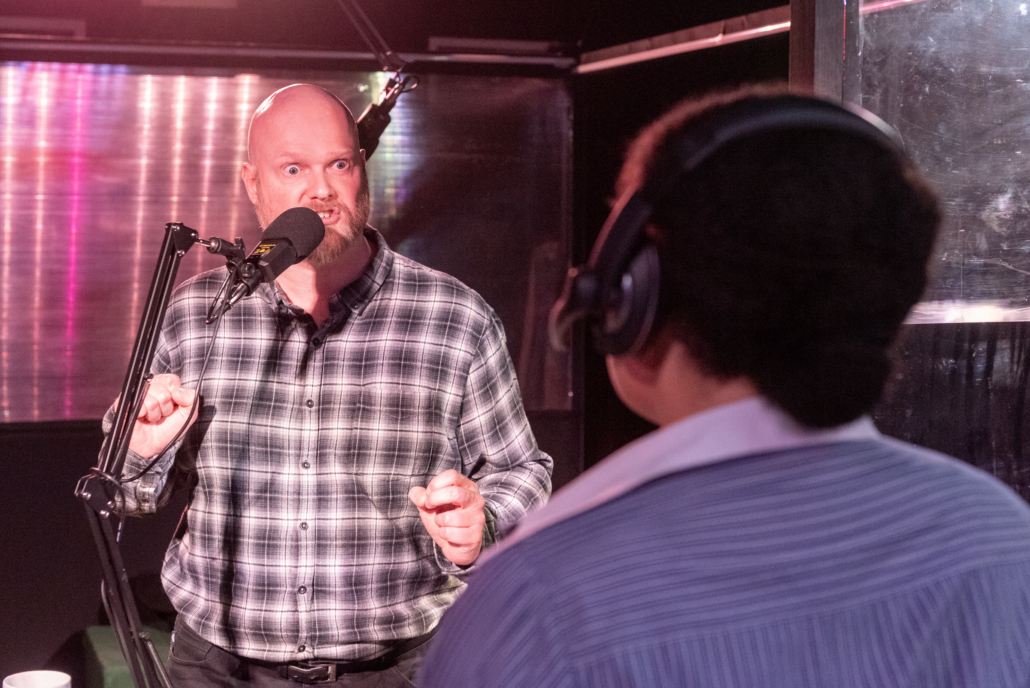
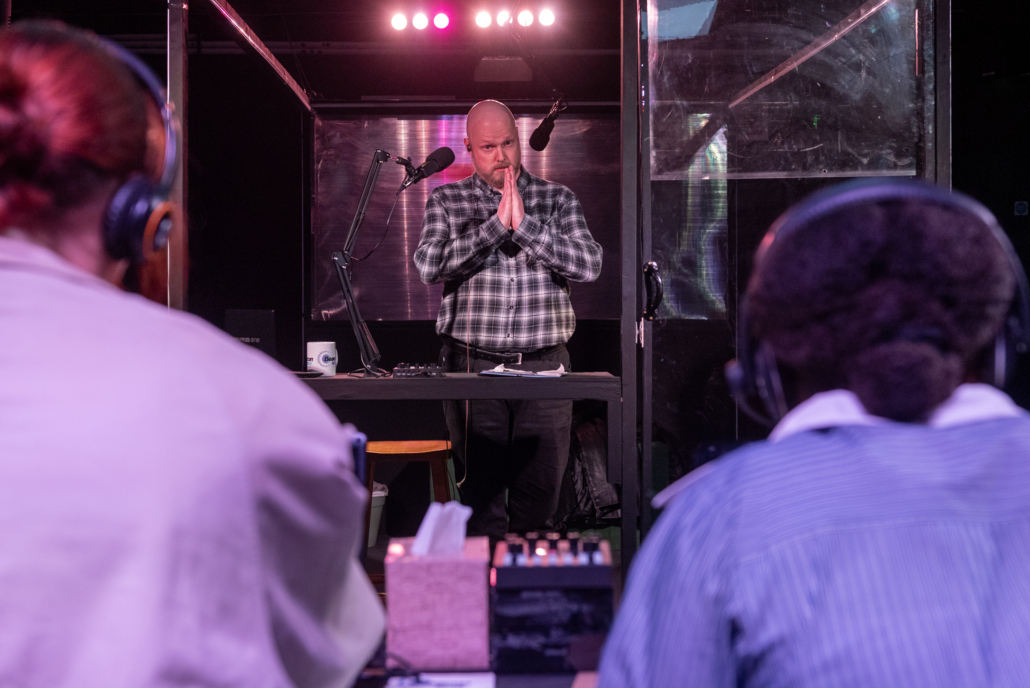
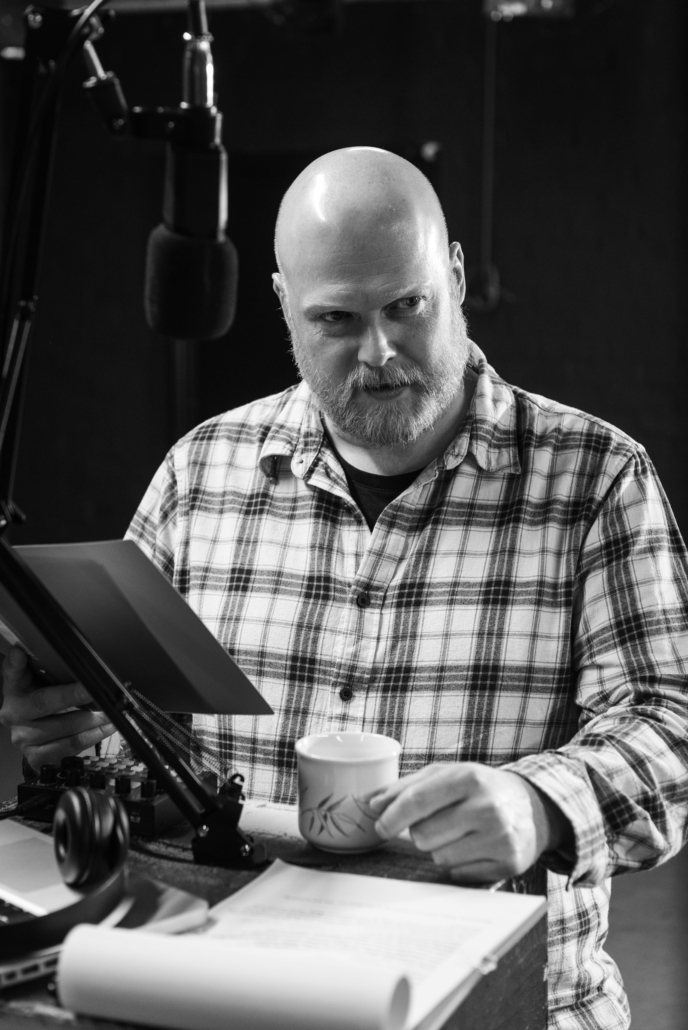
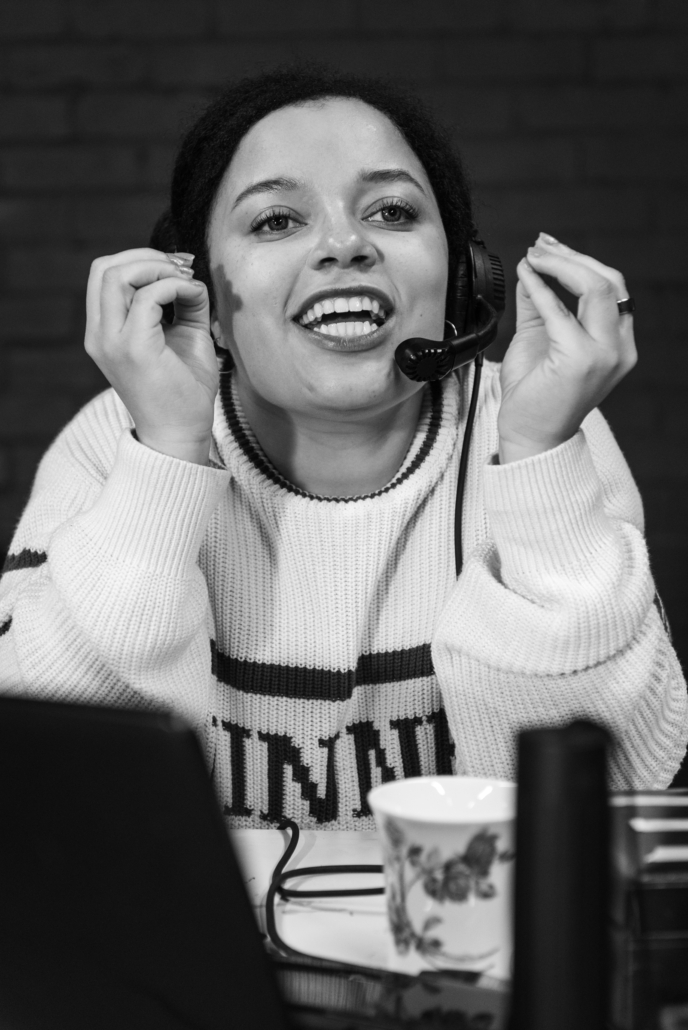
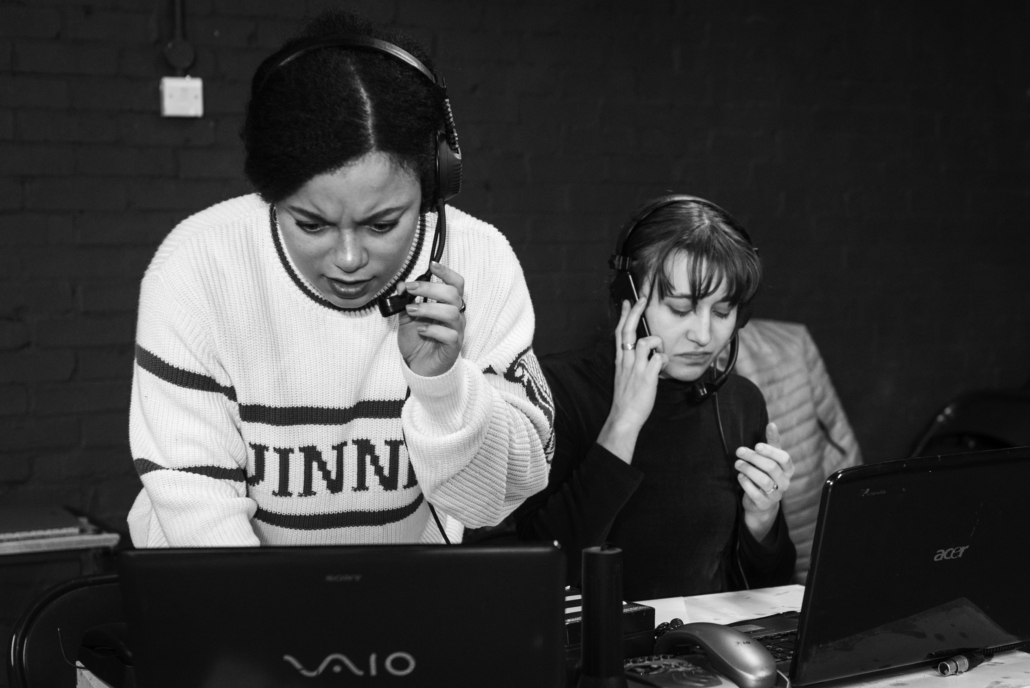
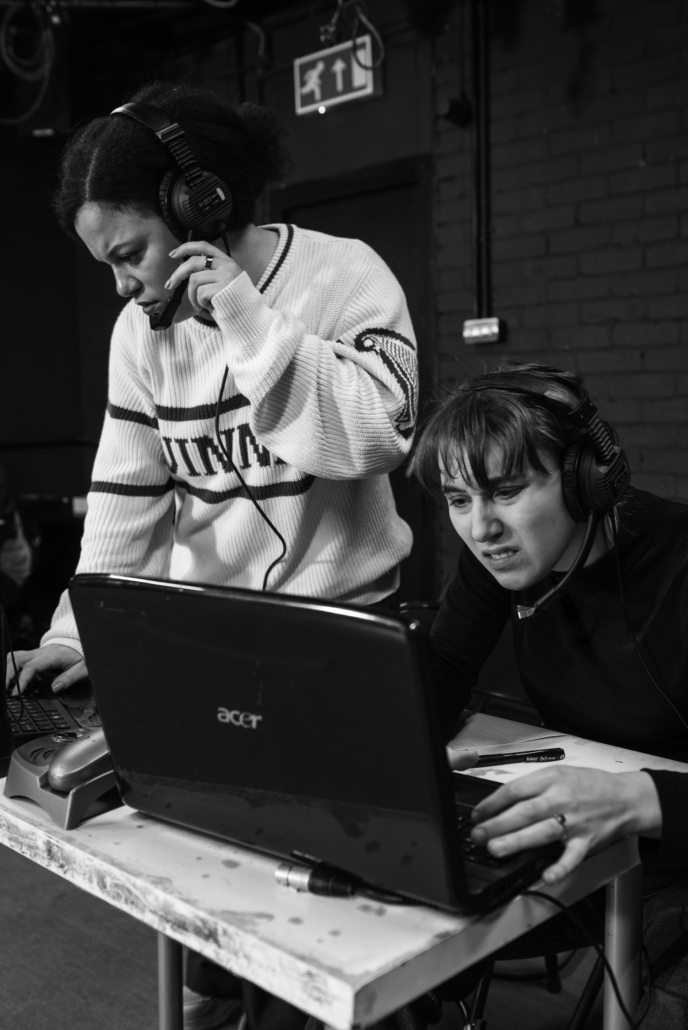
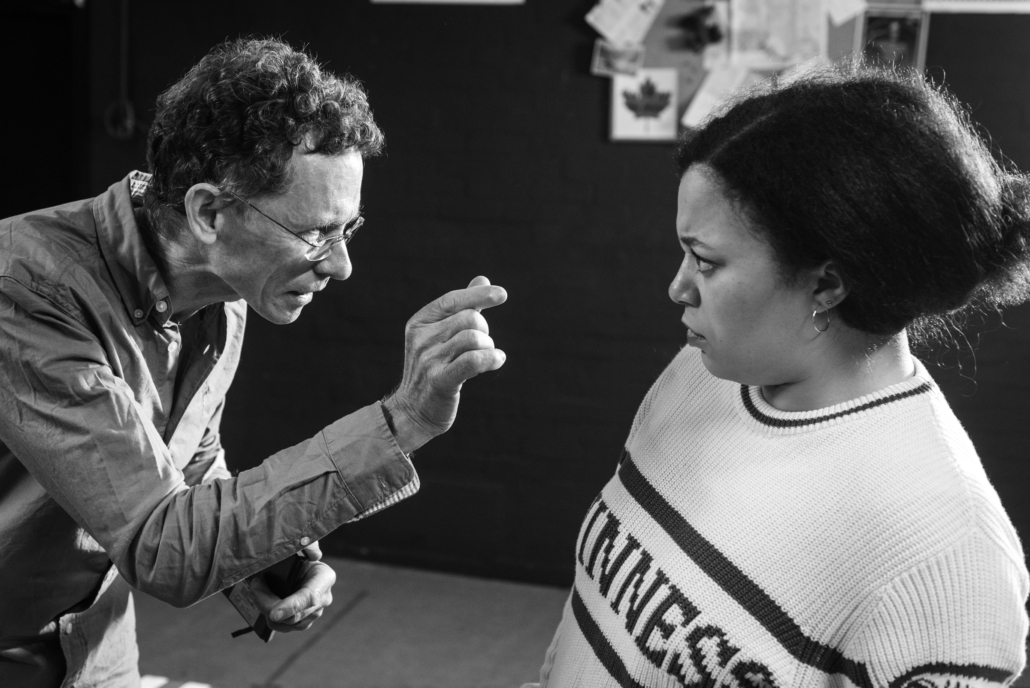
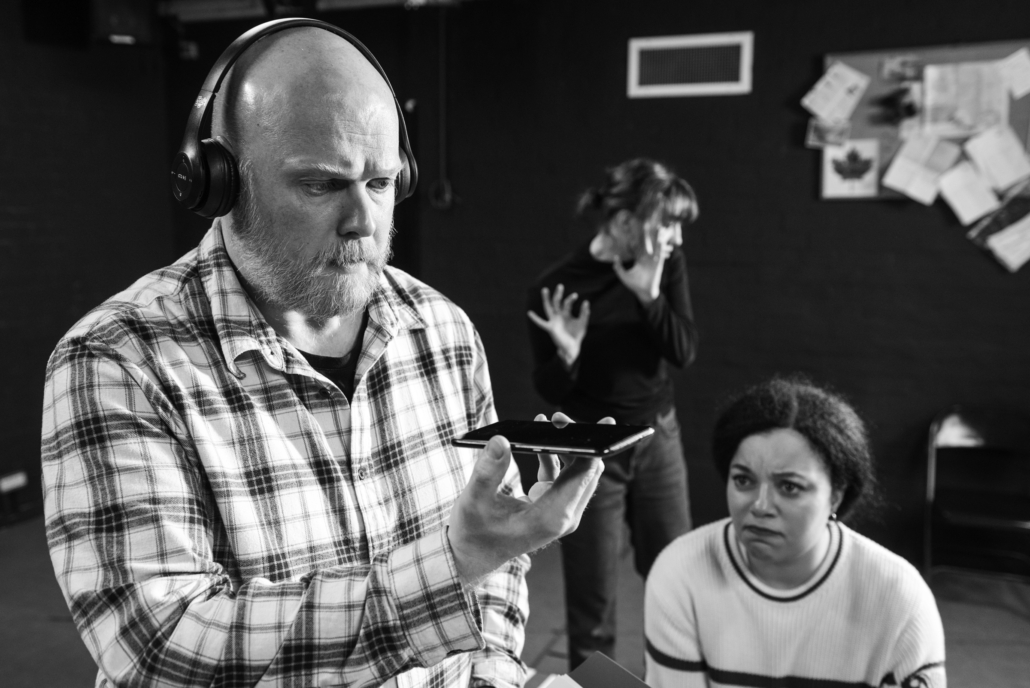
Shut in his church basement studio, washed-up shock jock Grant Mazzy has been exiled to local radio in remote Pontypool, Ontario. His confrontational style isn’t going over well with his producer, Sydney. She’d prefer that Grant stopped trying to antagonise his listeners and started reading the local news. Mrs French’s cat, Honey, is missing. Schools are closed due to the snow.
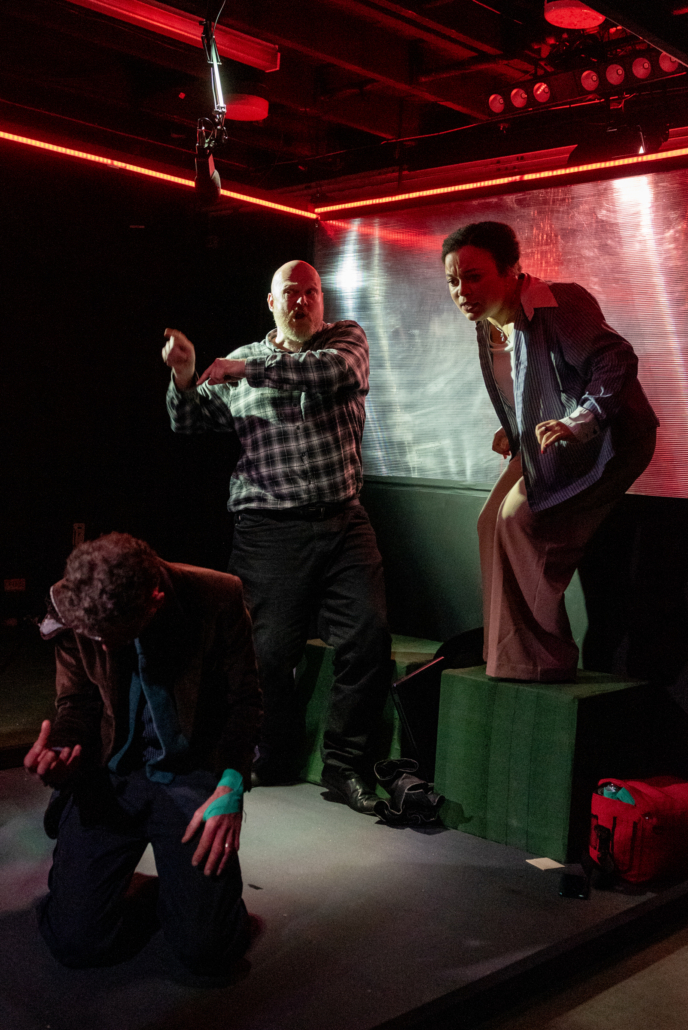
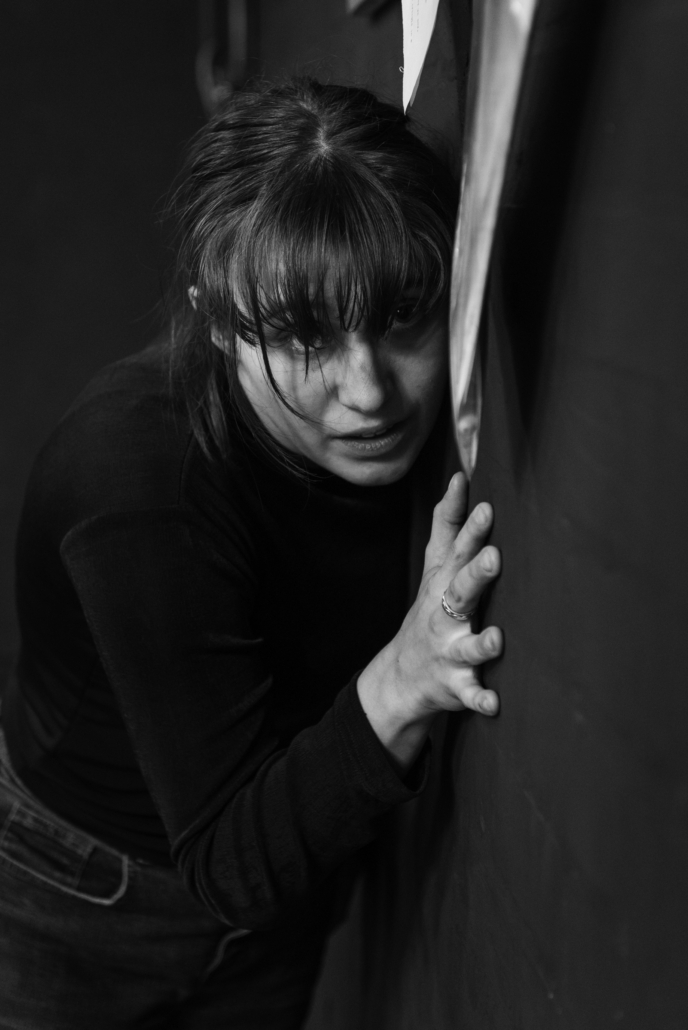
Up in the snowy town above, reports come in of a disturbance at the local doctor’s office, outbreaks of violence, and babbling crowds roaming the town.
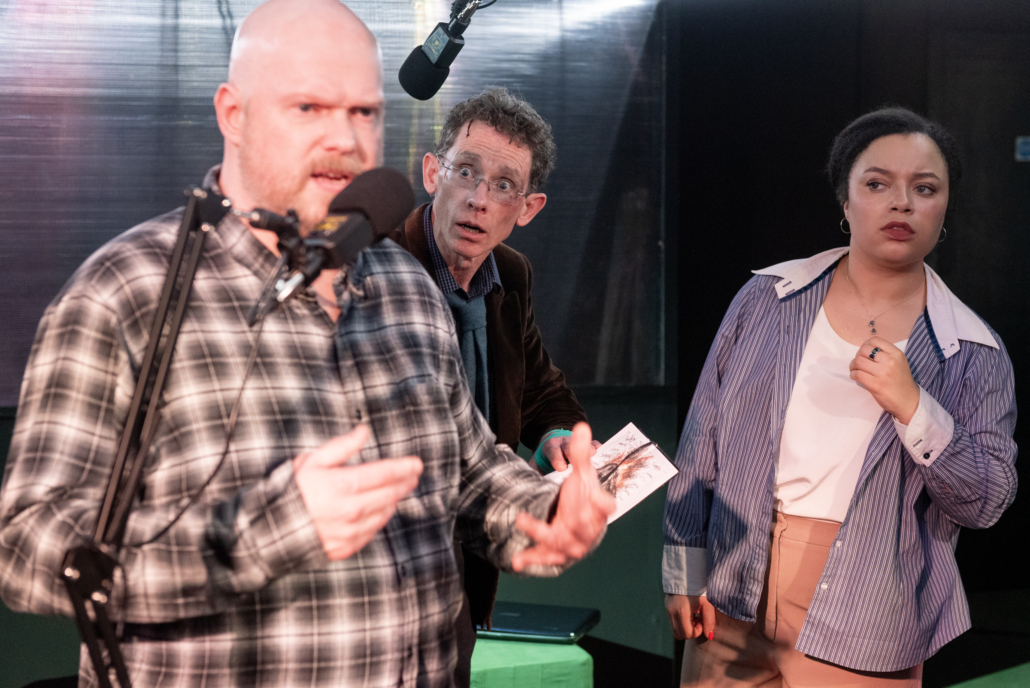
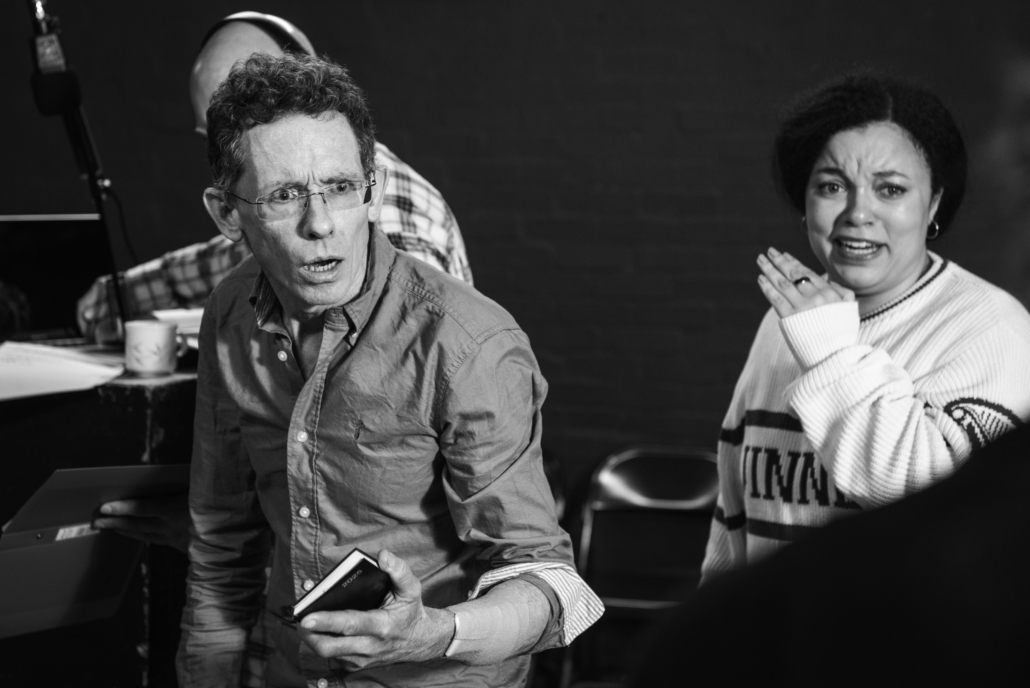
It’s a killer story – if it’s real. Grant and his team try to navigate the escalating chaos and find themselves at the centre of a story they’re still struggling to make sense of.
Words have always been Grant’s weapons, and now it seems he’s in the fight of his life. Or for his life.
Content Warning: Violence, moderate gore, mature themes.
Age guidance 16+
No readmission after play commences.
The stage adaptation Pontypool by Tony Burgess was first produced by Strawdog Theatre Company in Chicago, Illinois, from October 13 to November 4, 2012.
Director's Notes
DIRECTOR’S NOTES
I spent much of my early work life in radio stations. My first day of school work experience began with a meeting about whether or not Gangsters’ Paradise, at the time climbing the charts, was going to hit the hospital radio banned list. The station manager was adamant that ‘As I walk through the valley of the shadow of death’ earned it an immediate ban. We had hospice patients in our audience.
We choose our words carefully
Later I produced a magazine show on a newly formed bilingual student radio station. Frequent clashes between the presenters and the Students’ Union staff found me axing increasingly inflammatory ‘comedy’ from the show.
This is not who we are.
We use words to construct our identity and define the world around us.
Radio is a fascinating medium. It’s immediate, and intimate, a conversation delivered right to your ear, but it’s also broadcast out to anyone who can hear it. Thousands of tiny experiences simultaneously shared and separate. It’s a great premise for a scary story.
Horror stories explore what scares us in a controlled way, and the radio station setting is a lovely mechanism for letting Pontypool’s story unfold. The things being described are truly the stuff of nightmares, but it’s not happening here, it’s happening somewhere else. Until it isn’t, and it’s creeping into the room with you.
Pontypool’s claustrophobia comes from not the fact the characters might die, but from the way that everything around them is losing meaning, from social norms to words themselves. At its core is the fear we feel as our control of events around slowly but unstoppably slips away. When nobody is coming to save us, and we’re stripped of the means (in this language) to save ourselves.
This was speculative fiction when it was first written. Now it’s a familiar feeling for anyone with access to the news:
A man on the radio who’s made a career out of twisting people’s words, who can’t stop talking. People outside making no sense in attacking each other. A weird viral infection. Media voices making divisive political pronouncements.
Can you trust what’s on the air? Can you even trust the weatherman?
How do we survive a world that’s stopped making sense? We have a responsibility to choose our words carefully.
On Grant Mazzy’s morning show today, that’s never been more imperative.
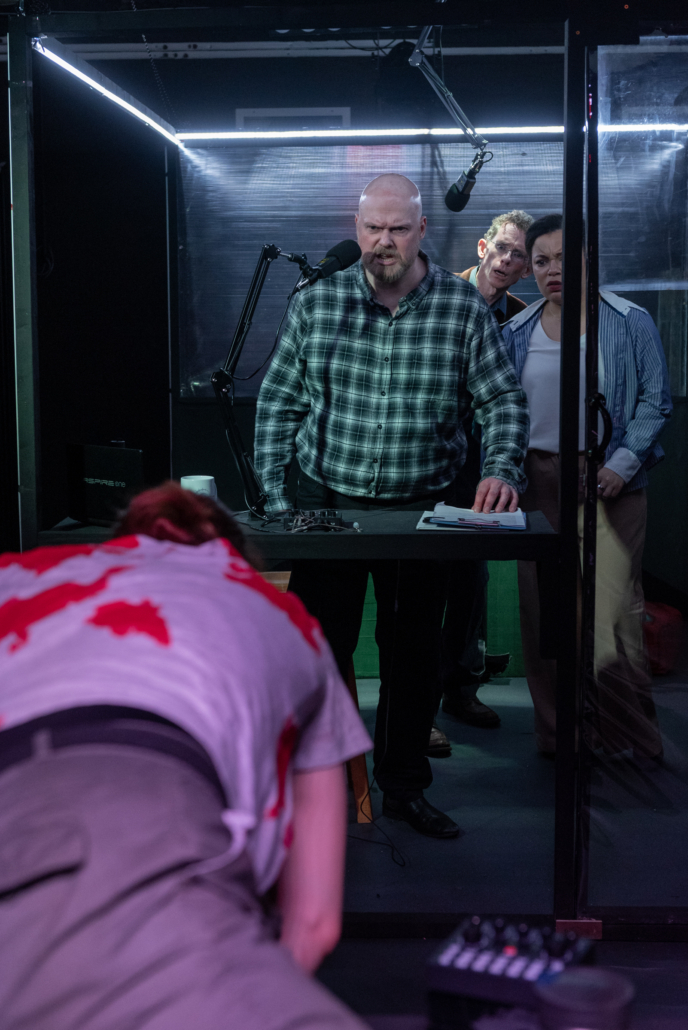
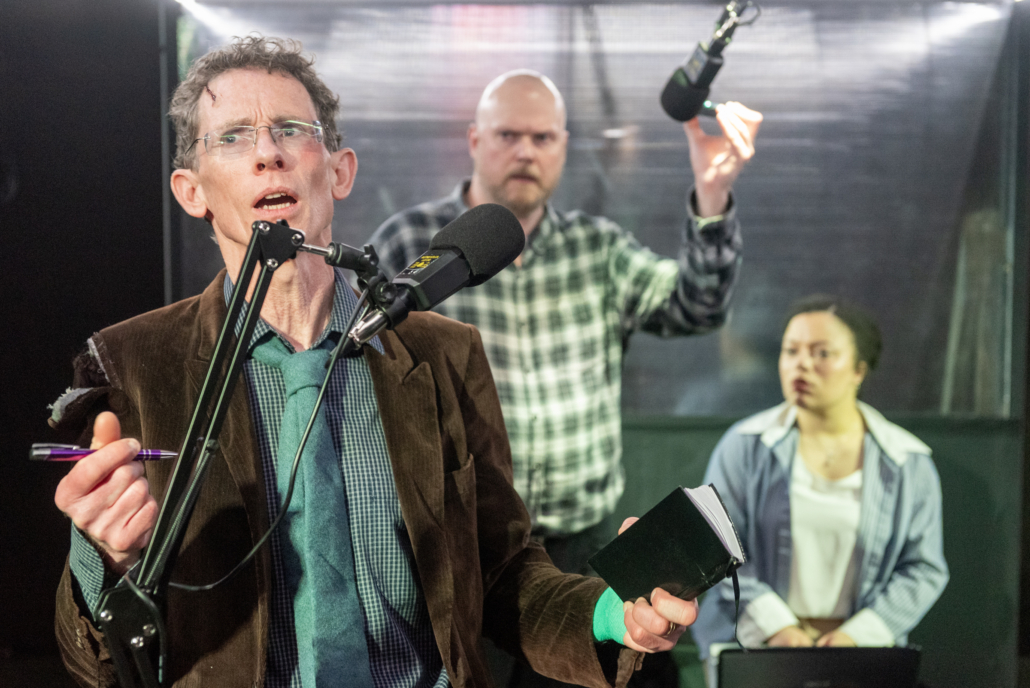
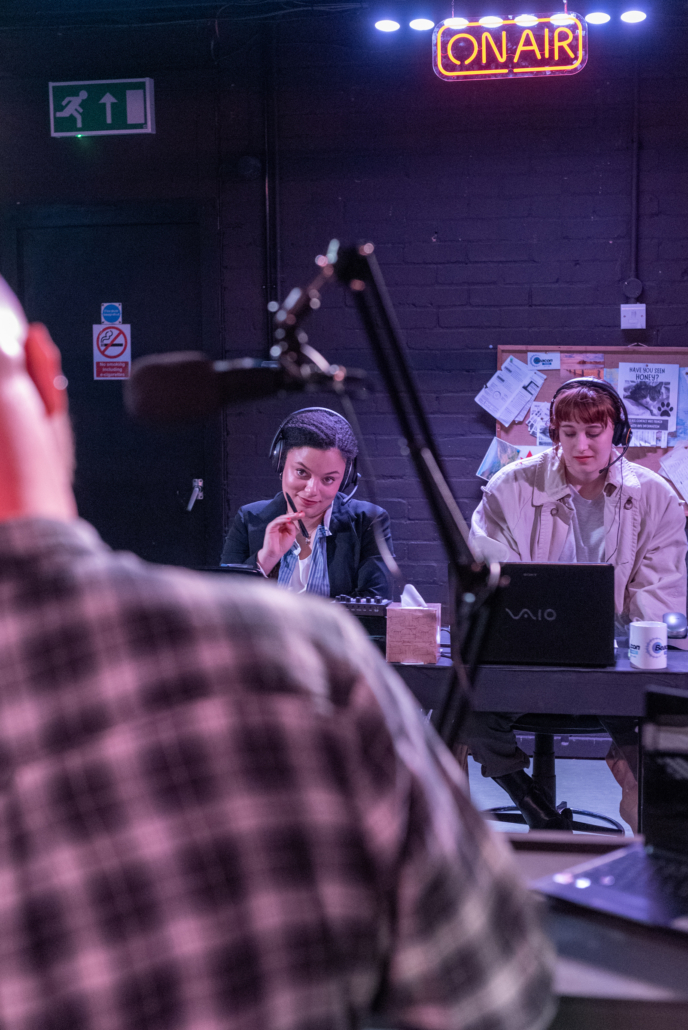
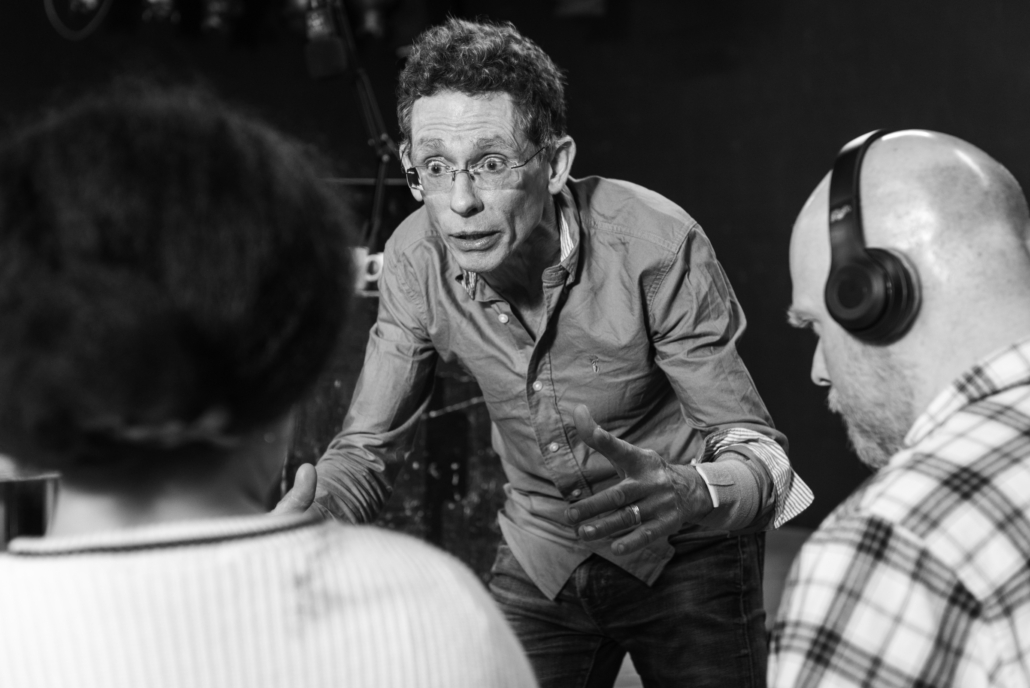
Setting a play in a tiny basement radio station is not without its challenges. The cast is trapped inside a radio booth. Much of the events outside are heard and never seen. Our adventurous cast and creative teams have made finding the solutions a joy, balancing practicality with the often surreal events of the play. Thanks must go to my Stage Manager, Giles Allen-Bowden, for coordinating many spinning plates.
As we’ve progressed through production, people have been very curious about the play. The Loft, they think, doesn’t really do horror. In a recent span of productions exploring the darker aspects of human life (Faustus, Macbeth, Medea, Frozen and, later this year Women of Troy, to name a few), I don’t think that’s strictly true. It’s probably close to the first time we’ve done this kind of horror though, and I am grateful to our Artistic Director for the opportunity to bring our unusual, scary play to the studio.
HANNAH BROWN
Director, Pontypool
REVIEWS
CAST & CREATIVES
Cast List
PHOTOS
Photos