WED 10 - SAT 20 JUNE

INFO
REVIEWS
CAST & CREATIVES
PHOTOS
INFO
“So rarely seen, this play by Tennessee Williams feels like a major discovery…..by the end it had me totally in its grip.”
Michael Billington, The Guardian
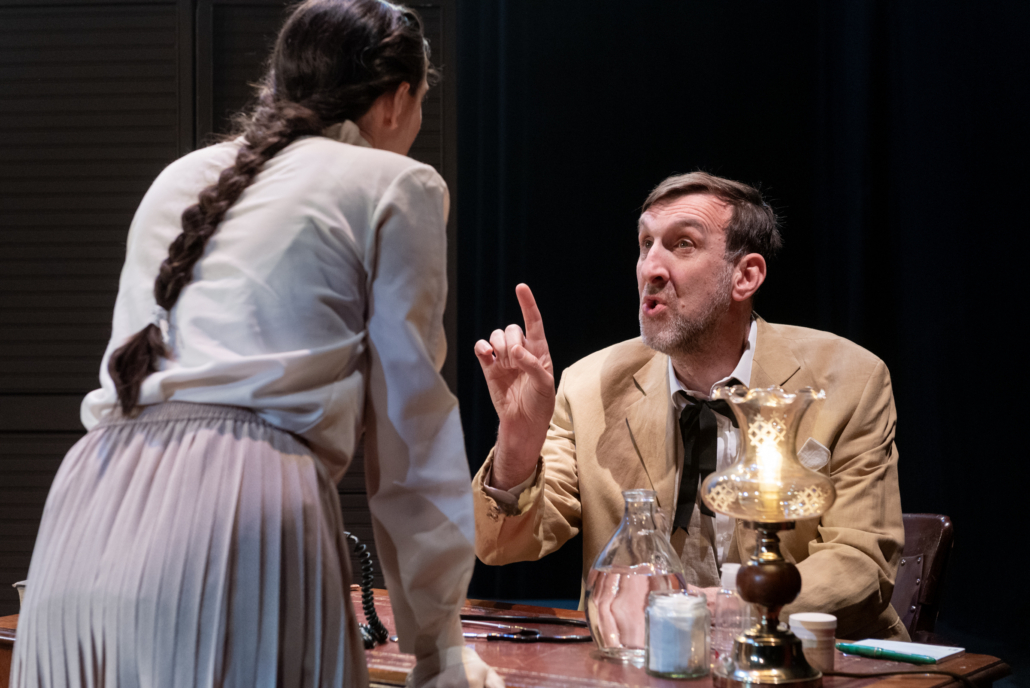
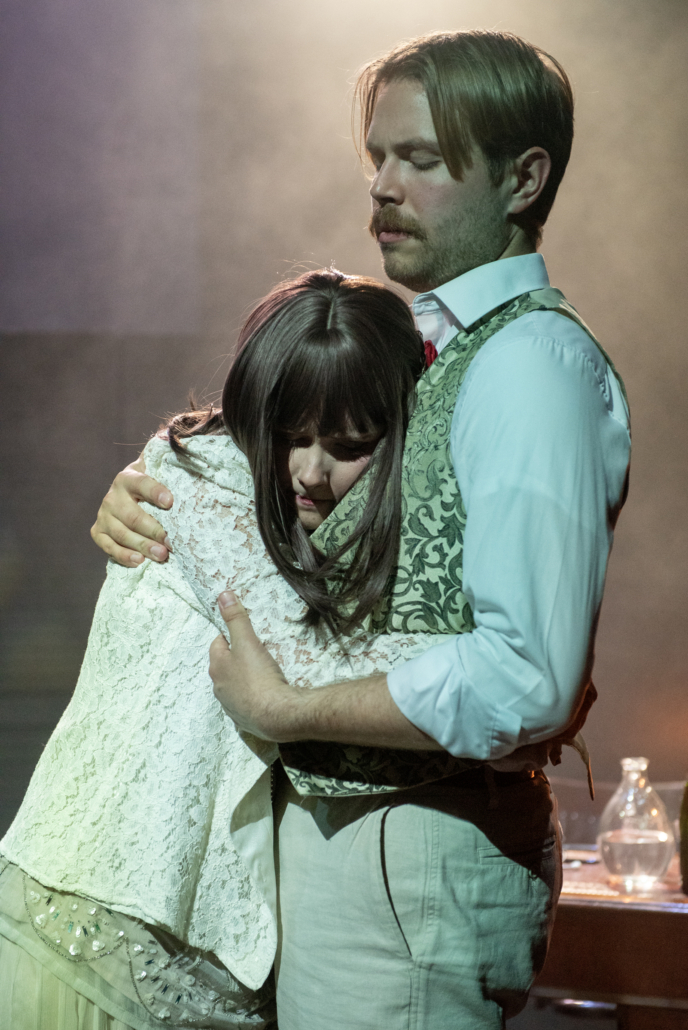
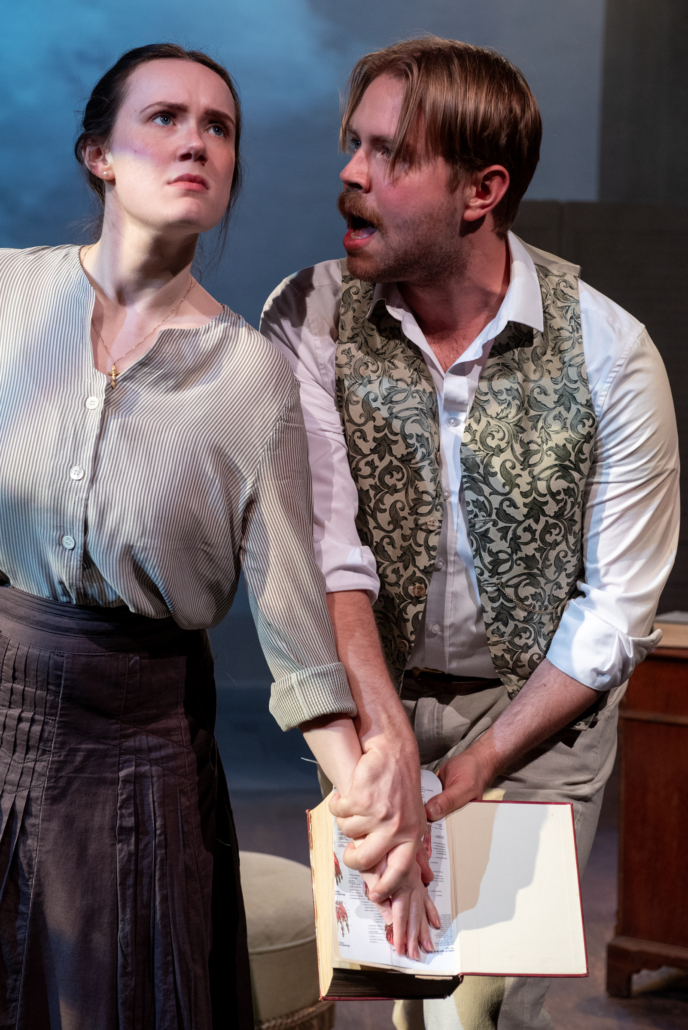
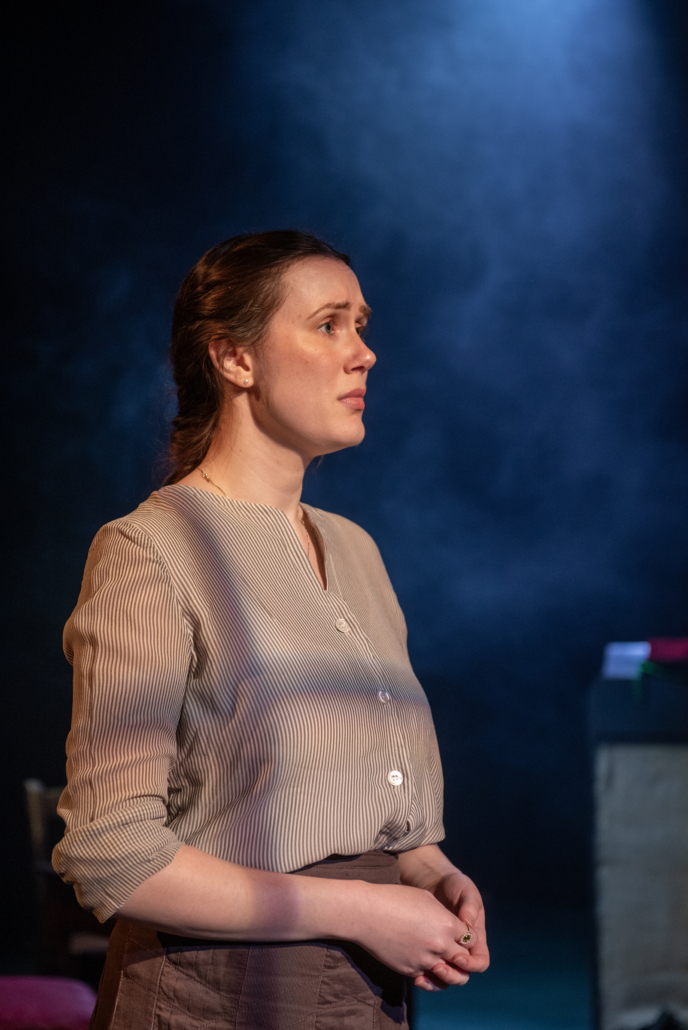
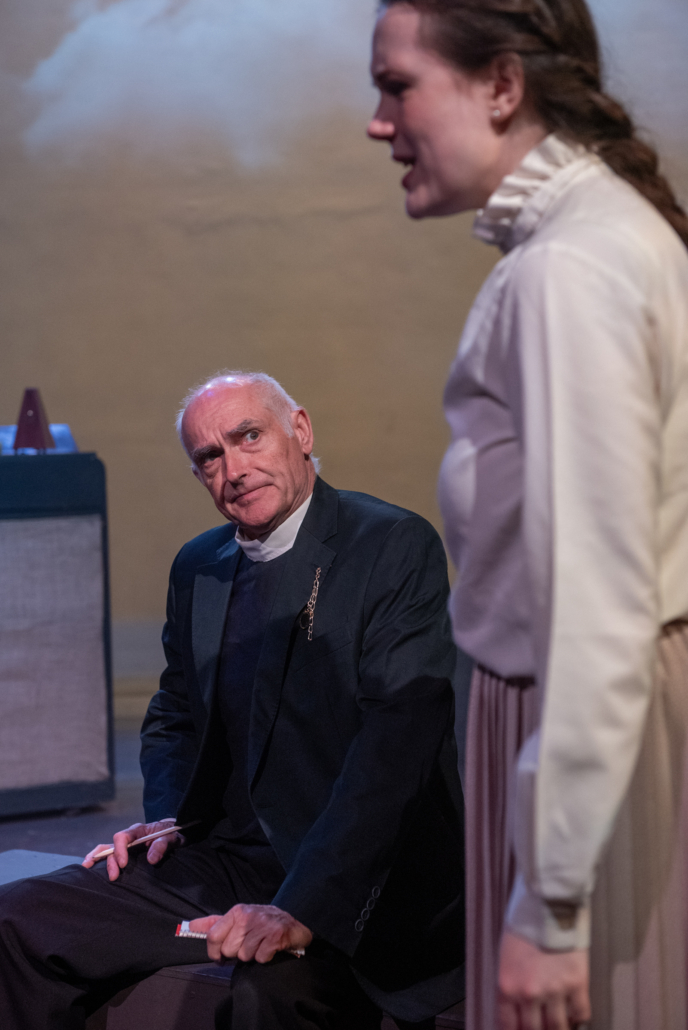
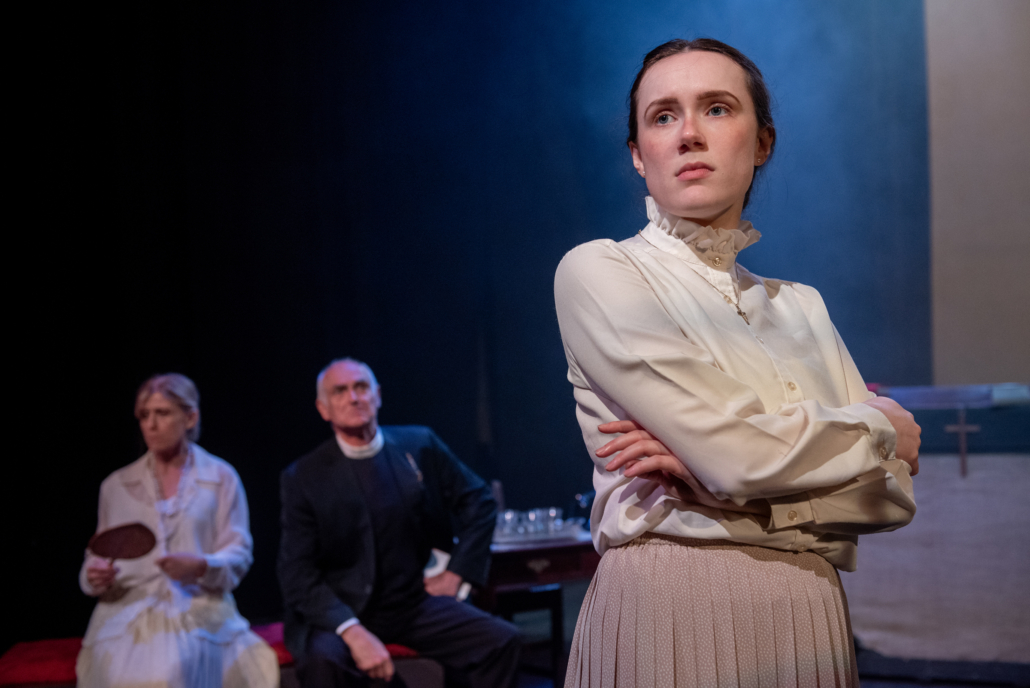
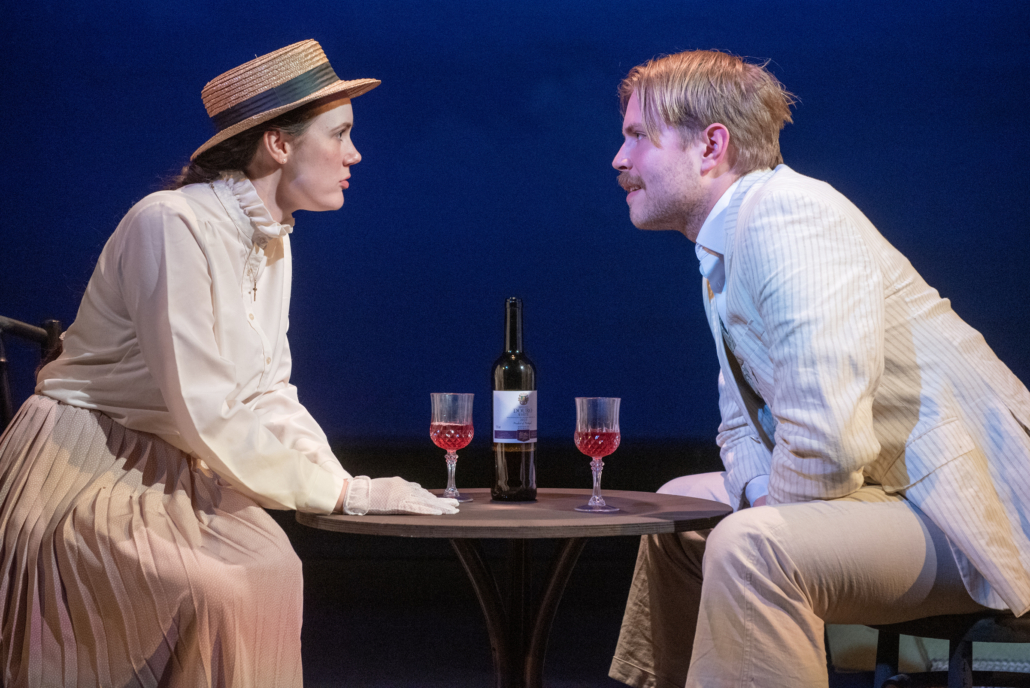
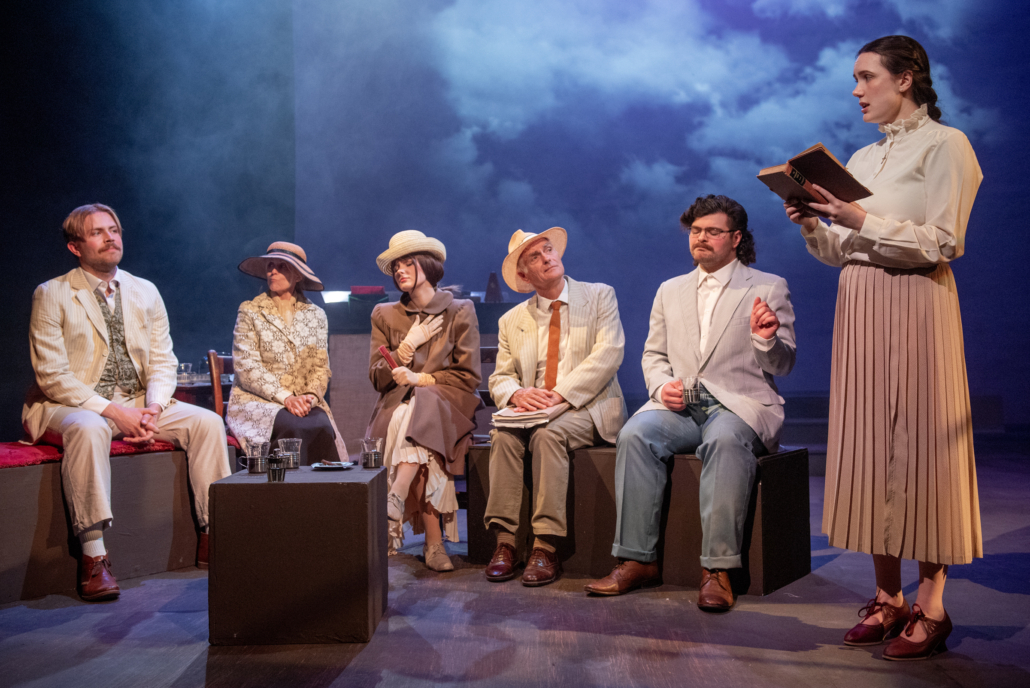
An intoxicating love story follows Alma, a young puritanical woman from a small town, whose undeclared love for an unpuritanical young neighbouring doctor, John, has driven her into a state of neurosis.
Alma is a singing teacher and the daughter of a minister. She has long been in love with John, the son of a doctor, who has recently returned to his family home following his medical studies. In the oppressive heat of summer, Alma meets John again and her life is turned upside down as she finds herself trapped between desire and the fear of it.
Can these two reconcile their differences, deal with their demons, their different views of the world and find a way to be together?
Written before and after Streetcar Named Desire, Tennessee Williams cited Alma as his finest creation. It had a triumphant revival at the Almeida and a West End transfer in 2018 – sold out in both venues and hailed as a masterpiece.
This amateur production of “Summer and Smoke” is presented by arrangement with Concord Theatricals Ltd. on behalf of Samuel French Ltd.
SUMMER AND SMOKE is presented by special arrangement with the University of the South, Sewanee, Tennessee, USA.
Running Time: 2 hours 20 minutes plus an interval
Age guidance 12+
Touches on themes of addition, violence, sex and mental health.
The performances contain occasional loud noises, including gun shots, lighting effects
and the smoking of herbal cigarettes.
Director's Notes
Summer and Smoke is a simply glorious play. Tennessee Williams declared that the character of Alma was his finest creation.
Everyone knows the playwright Tennessee Williams’ classic plays – A Streetcar Named Desire, Cat on a Hot Tin Roof and The Glass Menagerie. They may not know him for Summer and Smoke, written at the same time as Streetcar.
When I came upon it it felt like a major discovery, a revelation. It most recently arrived like a stealth bomber at the Almeida Theatre in London in 2018 under the skilful direction of Rebecca Frecknall, one of the most important directors working in theatre today. Her production was five star rated across the board, it got a West End transfer and you couldn’t get a ticket. As Michael Billington, the Guardian theatre critic at the time, wrote when reviewing it, the play had him “totally in its grip.”
Tennessee Williams’ fulsome instructions in his script are for no box sets, no slavish building of walls and doors or attention to time, but to free it up as a timeless story of two people, who find each other compellingly attractive. The themes in the play are timeless and so with a nod to the year of the play in 1916 we are also illuminating these themes in a way which I hope will relate to contemporary audiences.
Summer and Smoke is a tale of anxiety and emotional struggle. Loneliness rips through it as a theme. Alma, a young minister’s daughter who teaches music and John, a young doctor’s son, a recent graduate from medical school, have been brought up side by side in small town Mississippi. However, they look at the world through a completely different lens.
There is a battle between the body and the soul, about the physical and spiritual side of love. Religion vs science and an angel, often present, representing Alma’s spirituality. John’s physicality and Alma’s purity are palpable throughout the play.
The play is about them and the richly drawn group of people who interact with their lives. It is a classic tale of unrequited love of two people totally fascinated by each other, trying to come together and who, during the course of the play are given one last chance to breach the gap between them.
Williams is largely associated with ideas of repressed sexuality that struggle to break free, but he also writes poetically about the tender pain of impossible love and the consequence of being lost forever, not only to each other, but also to themselves.
We are loading the production with wonderful music, live singing, stunning lighting ‘fireworks’ in the literal and abstract sense and much humour amongst the emotionally charged scenes.
Don’t miss the opportunity to experience this marvellous company pull you into the intoxicating heat of a Mississippi summer, smouldering with passion and possibility.
SUE MOORE, DIRECTOR
REVIEWS
Reviews
“Having seen Sue Moore’s production of Summer and Smoke at The Loft, I’m bowled over yet again by the work of this company. The tragi-comic nature of the two central characters is beautifully brought out by Leonie Slater and Zander Gibney, and the conflict between repression and desire is flawlessly played. The haunting slide guitar that links the scenes, as well as the steamy vocals of Sage Woore perfectly creates the heat of the Deep South and the oppressive world of Tennessee Williams. Luca Catena, Mark Crossley, Tracey James, and Rod Wilkinson, make up an excellent cast. Bravo!
– David Bradley
“Summer and Smoke: A play that will stay with you long after seeing it. Leonie Slater gives a terrific performance” – Nick Le Mesurier: Warwickshire World Read Full Review
“Summer and Smoke is a lesser-known great from a master playwright, and…its expertly-woven dialogue creates a thoughtful and emotional immersion that is rarely seen at the theatre.” – Georgina Monk: Culture’s Coffee Read Full Review
“the audience were riveted and you could have heard a pin drop.” – Ann Evans: elementarywhatson Read Full Review
Roller-coaster well worth a ride
It’s a pleasure to see an infrequently presented play by one of America’s two leading dramatists of the 20th century. It’s about two lost young people, clergyman Winemiller’s piano teacher daughter Alma and Dr John Buchanan’s son John who has recently qualified as a doctor.
Tennessee Williams invites the audience to compare them by placing them in opposite houses where they can see each other. Alma is repressed and servile at first, forced by her vile father, here strongly played by Rod Wilkinson, to keep house after the breakdown of her mother. She wants to experience love but is too straightlaced to attract any suitable suitors. John wants to be a bad boy and escape his conventional career. The playwright teases us with the prospect of a romantic relationship but it is inevitable that this will not happen.
At the end Alma is still dissatisfied, still looking for love, but now with new desperation, while John resigns himself to his fate after the murder of his father and takes over his father’s practice.
Set designer Richard Moore captures perfectly the distances between characters by all the empty spaces between the bits of the setting. There is a pervading emptiness about the whole thing. Alma talks about finding her soul, but there is no soul in this environment.
Director Sue Moore highlights the audience’s focus on Alma and John by giving all the rest an element of caricature so that we are distanced from them. Perhaps we are meant to see all the others through Alma’s eyes. The doubling does the same, so that we are not invited to have feelings for the several characters played by the same actor.
Alma and John are difficult characters to play and Leonie Slater and Zander Gibney do a splendid job. I was a bit surprised to read that Tennessee Williams felt that Alma was his best artistic creation. In this production she ends up changing but not maturing. Leonie Slater’s busyness did much to create the audience’s frustration with her character. Zander Gibney’s stillness and impassivity made me warm to him more and the ending seemed more like some maturity rather than resignation.
This is a complex play, presenting the audience with a roller-coaster of reactions. It is well worth seeing.
– Peter Buckroyd Stratford-upon-Avon Herald
I don’t review theatre anymore. Too many death threats. But this one deserved a review. So I reviewed it.
What follows is my review of Tennessee Williams’ Summer and Smoke, directed by Sue Moore at the Loft Theatre, Leamington Spa— a production that reminded me why theatre matters and why, every now and then, something comes along that simply refuses to be ignored.
There is a misunderstanding about the American South. Visitors arrive and see smiles, church socials, peach pie and impeccable manners. They hear “Yes, ma’am” and “Bless your heart” and conclude they have discovered civilisation in its purest form.
What they have actually discovered is a society that has perfected emotional warfare.
Nobody shouts. Nobody throws punches. Nobody causes a scene. They simply smile politely and stab one another with peach pie forks.
Tennessee Williams understood this better than any playwright who ever lived. His plays are not populated by villains. They are populated by damaged people trying desperately to remain civil while their hearts quietly collapse behind perfect manners.
Every character is carrying something explosive. Every smile conceals a wound. Every pleasantry hides a battlefield.
The American South is not a place of emotional peace. It is a place of emotional containment. The people are not carrying baggage. They are carrying hand grenades. The pin was pulled years ago. The explosion is merely waiting for the appropriate social occasion.
And Sue Moore’s extraordinary production of Summer and Smoke understands this absolutely. Not intellectually. Instinctively.
The result is one of the finest pieces of theatre I have ever seen.
Not one of the finest productions at the Loft Theatre. Not one of the finest amateur productions. Not one of the finest productions outside London. One of the finest pieces of theatre. Full stop.
The performances are extraordinary. The direction is flawless. The production trusts Williams, the actors trust Williams, and because of that, the audience trusts them.
For anyone who has lived in the American South, the experience carries an additional layer of recognition. I recognised these people. I knew these people. I worked with these people.
The endless courtesy. The relentless politeness. The smiles. The rituals. The conversations that are never actually about the thing being discussed. The South’s native language is silence.
This production hears those conversations. Not the dialogue. The damage underneath it. Not the words. The pressure. Not what people say. What they spend their lives trying not to say.
The best theatre does not show us people falling apart. It shows us people trying not to.
Summer and Smoke is filled with people wrapped around internal hand grenades. The smile is the safety catch. The manners are the spoon. The soul is the explosive.
For two unforgettable hours you sit in the darkness listening to the ticking. And when the lights finally come up, you realise you have not merely seen a production of Tennessee Williams. You have seen why Tennessee Williams endures.
This is not excellent amateur theatre.
This is not excellent regional theatre.
This is theatre. At its highest level. Definitive.
– Mark Pitt:
CAST & CREATIVES
Cast List
PHOTOS
Photos